Crude Oil Markets Are Playing a Dangerous Game
01/07/2026
The crude oil market appears to be dominated by complacency at present – and is largely disconnected from underlying physical fundamentals. Crude prices have largely retraced to pre-conflict levels, as investors price in the reopening of the Strait of Hormuz, improved gulf exports and expectations that supply disruptions will ease. In many respects, the market is behaving as though the geopolitical shock has passed, however, the real physical market is less optimistic.
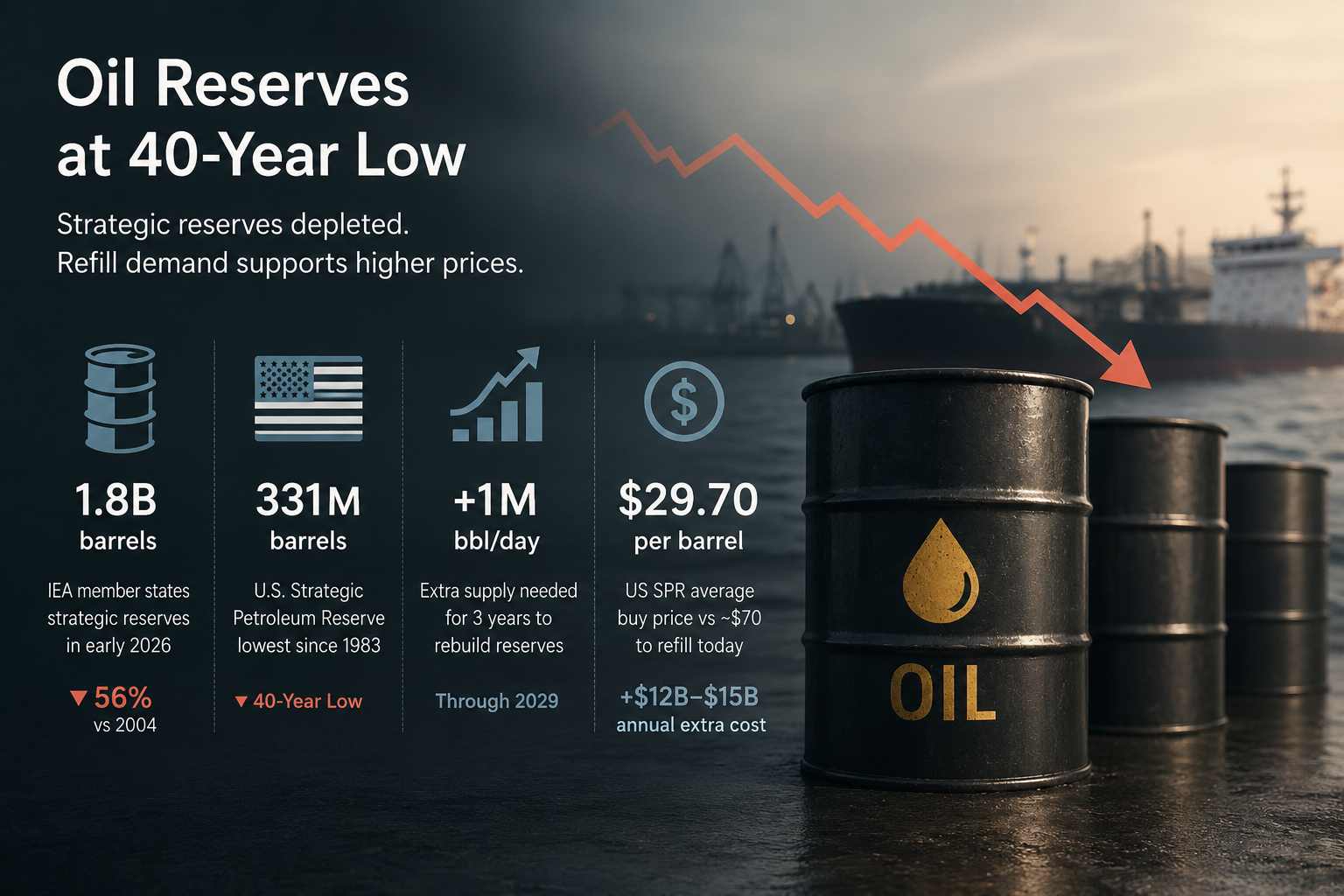
- However, global oil inventories have fallen to their lowest levels in more than four decades (since 1984), leaving the market with one of the smallest supply buffers in recent history. With inventories already depleted, the system has far less capacity to absorb any fresh disruption to production or shipping. Simultaneously, the situation around the Strait of Hormuz remains fragile – and while the waterway appears to be partially open, shipping conditions have yet to fully normalise and the outlook remains unclear.
- Elevated insurance costs, cautious tanker operators and lingering security concerns, continue to highlight that the current arrangement is far from a permanent resolution. This creates a greater risk profile, as the market appears to be pricing a smooth normalisation in regional supply, while overlooking how vulnerable the physical market has become after a massive drawdown in inventories to 1984 levels.
- Should geopolitical tensions reemerge or shipping through Hormuz face renewed disruption, the combination of historically tight inventories and limited spare buffers leaves oil prices far more sensitive to supply than what market pricing suggests.
- According to IEA estimates, restoring depleted stocks would necessitate an additional 1 million barrels per day of supply for three years, beyond normal demand growth, extending through 2029. This sustained refill demand supports prices, even as a surplus is projected for 2027, thereby limiting the coexistence of low oil prices and active reserve replenishment.
- Oil withdrawn from these reserves was originally acquired at low prices but must now be replaced at significantly higher costs. The US reserve has an average acquisition price of $29.70 per barrel, compared to a current refill cost of approximately $70 per barrel. Additionally, a permanent Gulf freight and insurance premium of about $2 per barrel adds an estimated $12 billion to $15 billion annually to global trade expenses.